11 hr
Chiang Rai Temples & Karen Village Day Trip from Chiang Mai
Full-day journey to northern Thailand's most striking temples and a traditional hill tribe community
Reserve
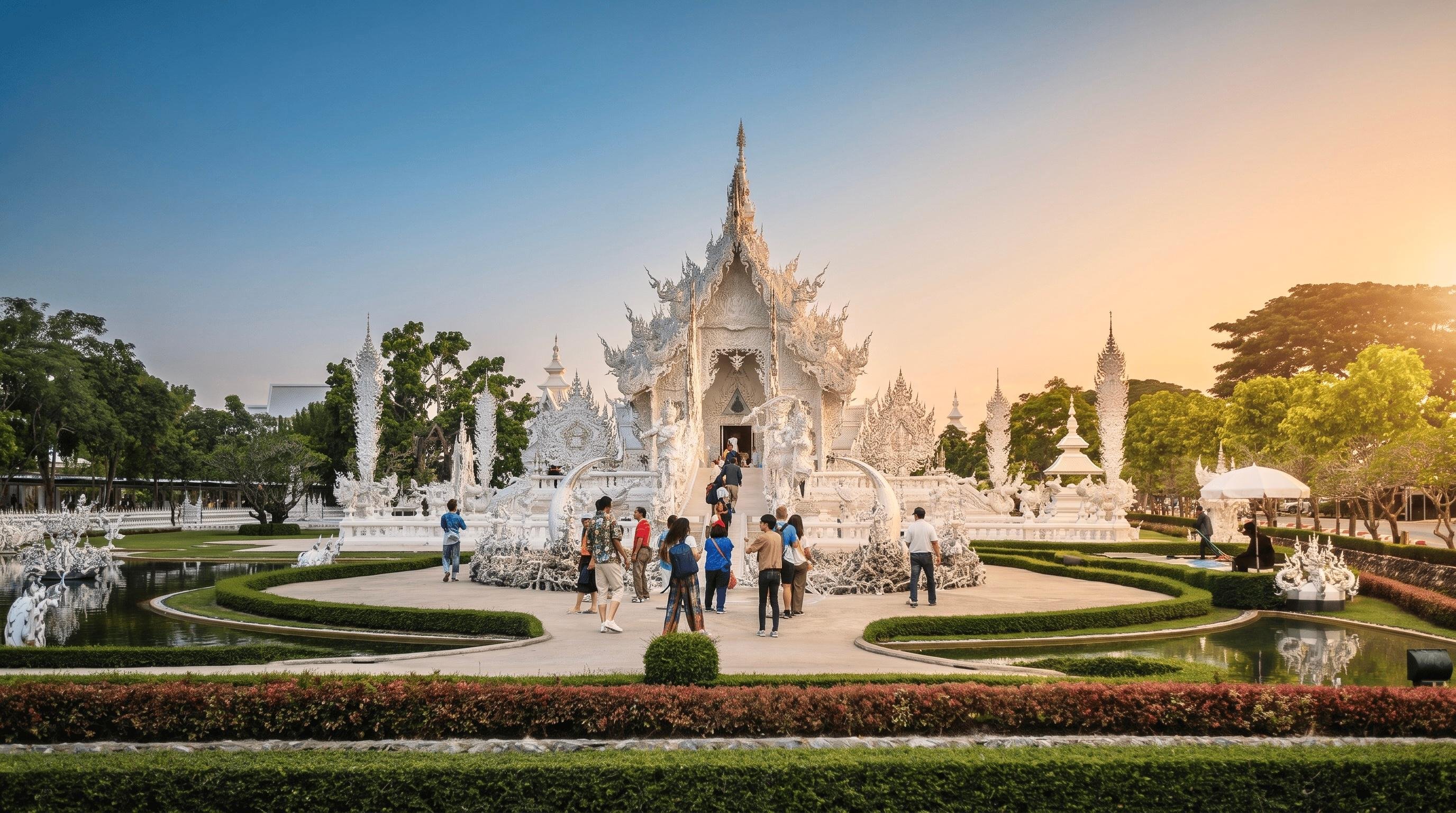
Journey north to Wat Rong Khun, where contemporary Buddhist art meets architectural rebellion
Hand-picked by our editors — only the best 5 experiences from 47 reviewed
Verified partners for every tour, free cancellation where available, and instant confirmation on every booking.
11 hr
Full-day journey to northern Thailand's most striking temples and a traditional hill tribe community
Reserve
12 hr
Journey north to visit the White, Blue, and Red Temples with scenic café stops and cultural insights.
Reserve
24 hr
Discover three stunning contemporary temples, soak your feet in natural hot springs, and explore a fairytale café in the Thai countryside.
ReservePrices from verified partners. Availability updates in real time at checkout. Free cancellation policies apply where shown.
The landmarks, rooms, and views travelers on this tour remember — all visible on a single visit.
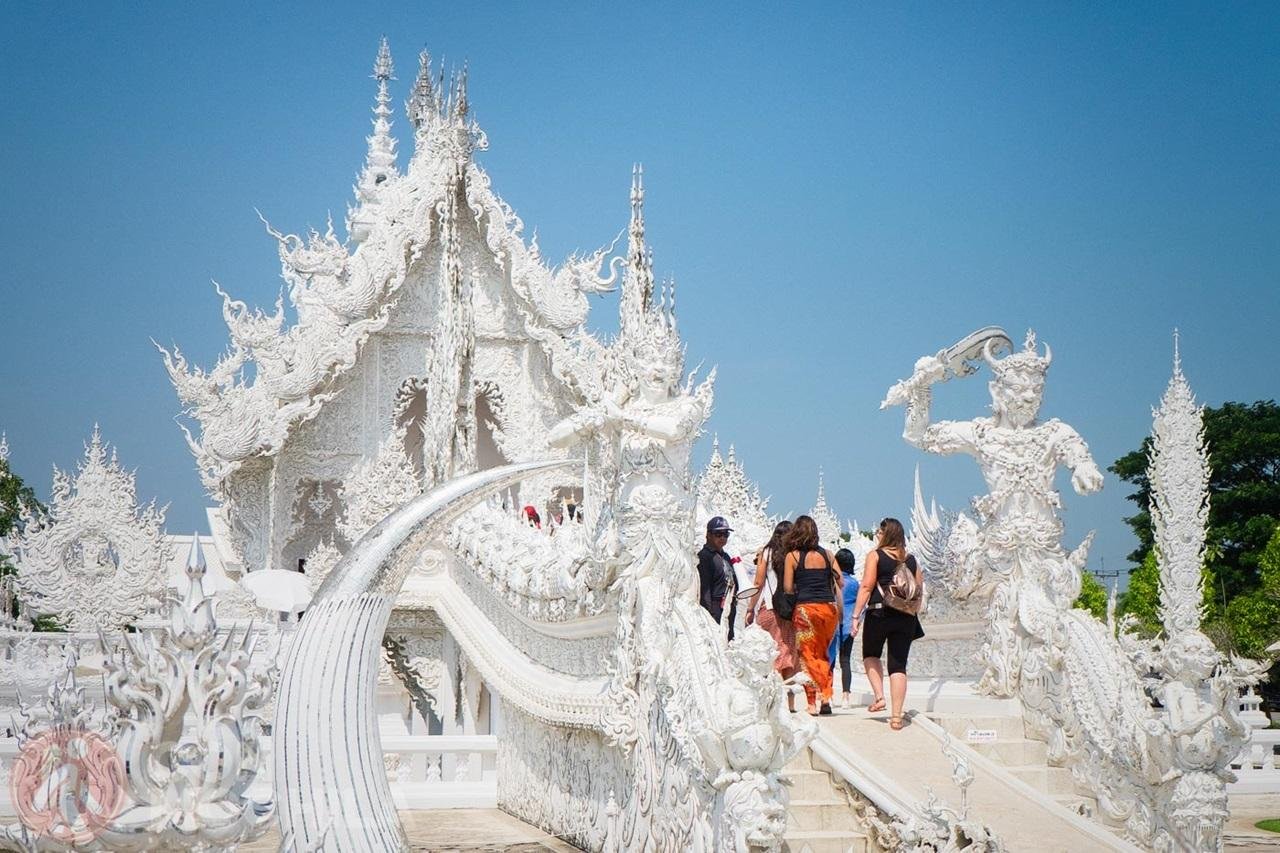
The bridge symbolizes the crossing from the cycle of rebirth to a state of nirvana, surrounded by reaching hands.
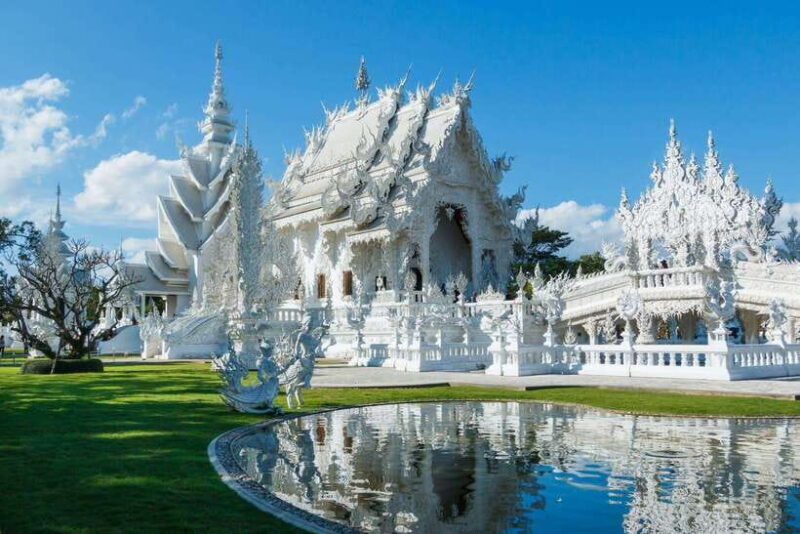
The main temple building is adorned with white plaster and glass mosaics representing purity.
This distinct gold-colored structure serves as a restroom facility, representing the body and worldly desires.
Located on-site, this gallery displays detailed paintings and artistic works included with your entry fee.
Intricate sculptures beneath the bridge depict the suffering of the underworld.
They complement each other; most visitors who do both call the White Temple the more surreal masterpiece, while the Blue Temple provides a more vibrant, immersive artistic experience. Booking your chiang mai to chiang rai white temple tour tours ensures you witness the stark contrast between these two architectural icons.
| Feature | Top pick White Temple | Blue Temple |
|---|---|---|
Design Style |
Surreal contemporary | Modern Lanna revival |
Artistic Theme |
Cycle of rebirth | Buddhist mythology narrative |
Primary Color Palette |
Monochromatic white | Deep sapphire and gold |
Vibe |
Contemplative and ethereal | Immersive and energetic |
Typical Visit Duration |
1.5–2 hours | 45–60 minutes |
| See tickets → |
Verdict: If you prioritize visionary sculpture and intricate detail, the White Temple is essential, whereas those seeking vivid color and cultural storytelling find the Blue Temple an ideal addition to their chiang mai to chiang rai white temple tour tickets.
Choose your ticket, select your date, and reserve in under two minutes. Secure checkout handled by our verified partner.
Instant confirmation by email, with a mobile voucher you can save offline. No printing, no queuing at a collection desk.
Arrive at the entrance, show your voucher on your phone, and walk in. Most tickets include priority or skip-the-line access.
Best time to go, insider tips, nearby landmarks, and the cancellation fine print — flip through to skim what matters to you.
How crowds, weather, and events shift across the year.
September to November offers cooler temperatures and clearer skies for touring Northern Thailand.
December to February is peak season with minimal rain, though crowds are at their highest level.
March to May is hot and dry, making early morning arrivals essential for comfort.
June to August features occasional tropical rain which can provide relief from the heat.
Small details that turn a good visit into a great one.
The chiang mai to chiang rai white temple tour is best experienced by arriving at 08:00 to beat the heat.
Wear slip-on shoes as you will be required to remove them before entering temple buildings.
Light reflects best on the white glass in the early morning sun.
Book your chiang mai to chiang rai white temple tour in advance to secure transportation logistics.
Northern Thailand can be humid; carry a refillable water bottle throughout your chiang mai to chiang rai white temple tour.
Carry a sarong to cover up if your outfit is deemed inappropriate by staff.
Non-bookable sights within a short walk — free to visit, easy to pair.
A large waterfall located in a forest park with a hiking trail.
A vast agricultural park offering tea plantations and scenic views.
An artistic complex featuring dark architecture and wood carvings.
A large temple complex featuring a massive Guan Yin statue.
Flexible, no hidden fees.
Full refunds are available if requested at least 24 hours prior to the scheduled tour start time. The 200 THB foreign visitor entrance fee is non-refundable once processed by the venue.
Hand-picked options within walking distance — pick a district for vibe, or a specific hotel for convenience.
Upscale hotel with comprehensive amenities.
Comfortable and modern lodging in the city center.
Clean and affordable option for solo travelers.
Variety of boutique guesthouses.
Chalermchai Kositpipat began constructing Wat Rong Khun in 1997 with a singular vision: to build a monument to Buddhist philosophy rendered entirely in white plaster and mirrored glass. The Chiang Rai artist rejected government funding and corporate sponsorship, financing the project through private sales of his paintings to retain complete creative control. Unlike Thailand's classical temple architecture with its gilded roofs and earth-toned walls, Wat Rong Khun gleams like a frost palace, its spires and gables encrusted with thousands of reflective fragments that catch northern Thailand's equatorial light. The temple's iconography defies convention. The Bridge of Rebirth, which visitors cross to reach the main hall, emerges from a pit of hundreds of sculpted hands reaching upward—representations of desire and suffering in Buddhist cosmology. Inside the ubosot, murals depict contemporary icons: superheroes, science fiction spacecraft, and pop culture figures woven into scenes of temptation and enlightenment. Chalermchai views modernity not as separate from spiritual practice but as its newest battlefield. The golden building behind the main temple serves as restrooms—a deliberate contrast, with gold representing worldly concerns and white symbolizing purity of mind. Construction continues as of 2026, with completion projected for 2070. Nine structures stand finished, with plans for a total of eighteen buildings across the 12-acre complex. The Cave of Art gallery, included with the 200-baht entrance fee, houses Chalermchai's paintings and sculptures that fund ongoing work. Daily visitor numbers frequently exceed 5,000, making early arrival essential. Most Chiang Mai to Chiang Rai White Temple tours depart between 07:00 and 08:00 to reach the site at opening, before midday heat and coach groups converge. The temple sits 13 kilometers south of Chiang Rai's city center in Pa O Don Chai subdistrict, a location Chalermchai selected for its visibility along Highway 1. Unlike Chiang Mai's ancient Lanna temples or Bangkok's royal complexes, Wat Rong Khun exists outside Thailand's established temple networks, neither funded by monarchy nor governed by the national sangha. This independence allows Chalermchai to continue his unorthodox artistic program, creating what scholars now classify as one of Southeast Asia's most significant examples of contemporary religious architecture. The site has become northern Thailand's most visited cultural landmark after Doi Suthep, drawing photographers, architecture students, and pilgrims in equal measure.
"Chalermchai views modernity not as separate from spiritual practice but as its newest battlefield."
Photography is allowed outside, but strictly forbidden inside the main building during your chiang mai to chiang rai white temple tour.
Modest clothing covering shoulders and knees is mandatory for all visitors on a chiang mai to chiang rai white temple tour.
Yes, families are welcome on a chiang mai to chiang rai white temple tour as long as children are supervised.
The grounds are mostly paved and accessible for visitors on a chiang mai to chiang rai white temple tour.
A standard visit lasts approximately 1–2 hours during a chiang mai to chiang rai white temple tour.