13 hr 30 min
Chiang Rai Temple Circuit & Karen Village Day Trip
Journey through northern Thailand's spiritual and cultural gems on this full-day adventure from Chiang Mai
Reserve
White Temple, Blue Temple, and hill-tribe villages, all in one northern sweep
Hand-picked by our editors — only the best 7 experiences from 34 reviewed.
Verified partners for Chiang Mai to Chiang Rai tours, free cancellation where available, and instant confirmation on every booking.
13 hr 30 min
Journey through northern Thailand's spiritual and cultural gems on this full-day adventure from Chiang Mai
Reserve
13 hr
Journey north to explore three iconic temples and witness traditional Karen culture on this action-packed day trip
Reserve
24 hr
Journey through striking contemporary temples, soak in natural springs, and discover Chiang Rai's artistry
ReservePrices from verified partners. Availability updates in real time at checkout. Free cancellation policies apply where shown.
The landmarks, rooms, and views travelers on Chiang Mai to Chiang Rai tours remember — all visible on a single visit.
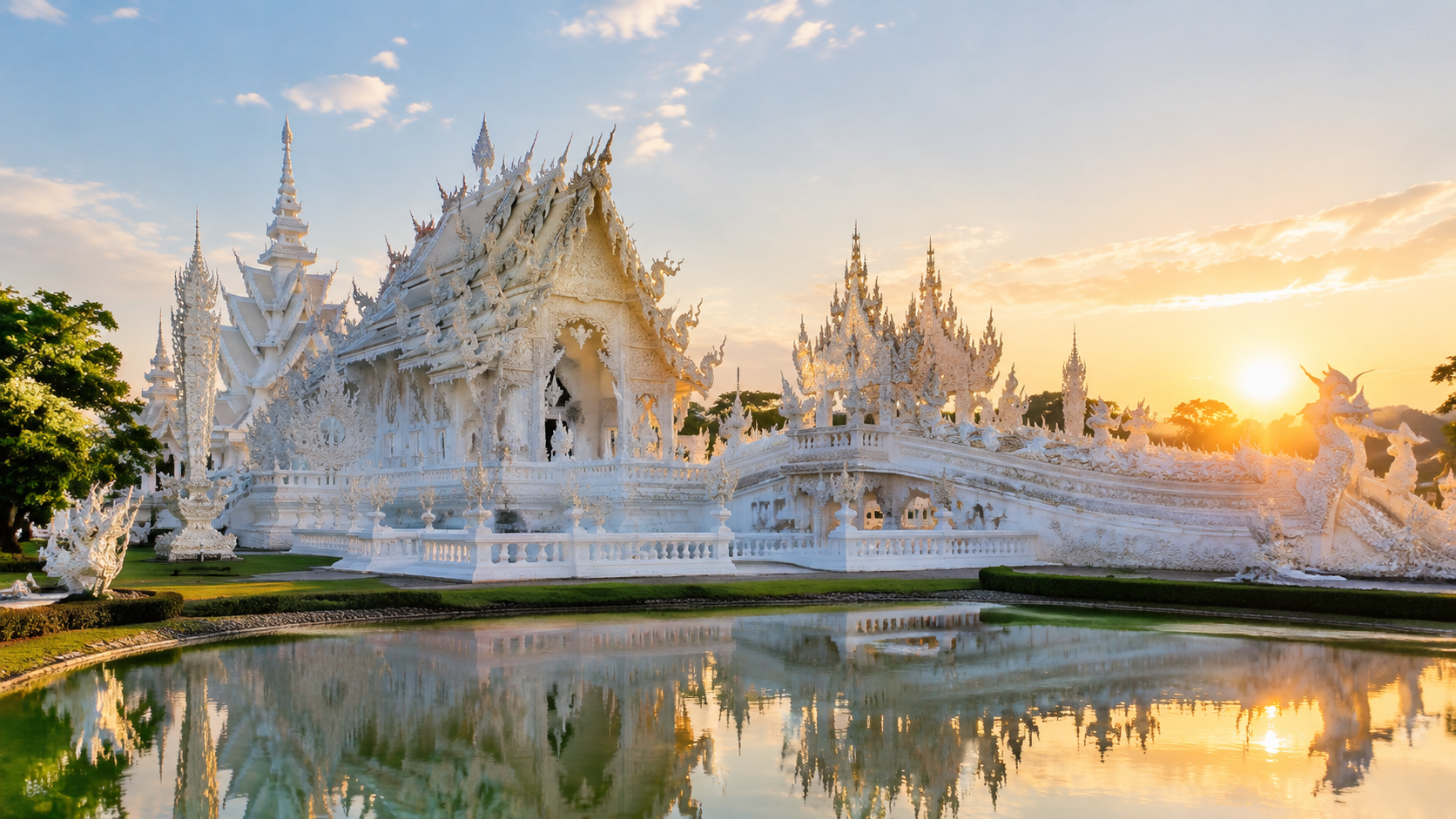
This structure showcases contemporary religious art with intricate glass mosaics that catch the sunlight. It is the most photographed feature within the Chiang Rai Temples complex.
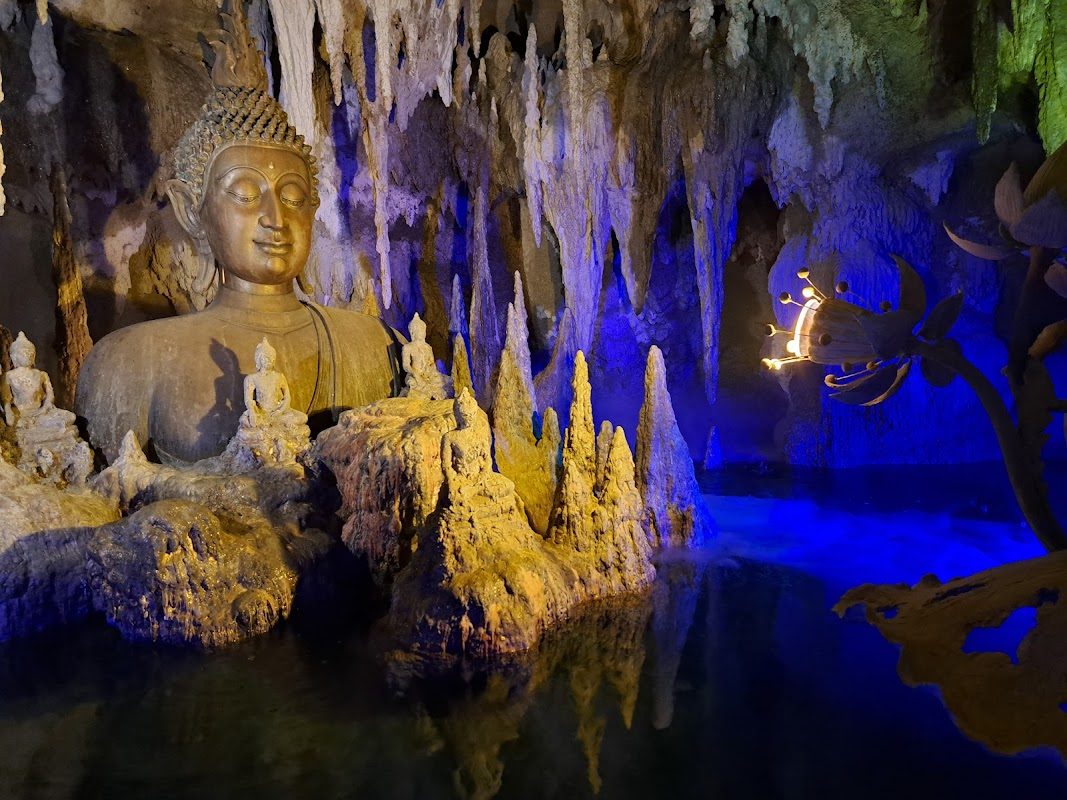
This space houses ancient murals and sculptures preserved with the conservation fee from your tour. It features a unique cooling effect due to the natural stone walls.
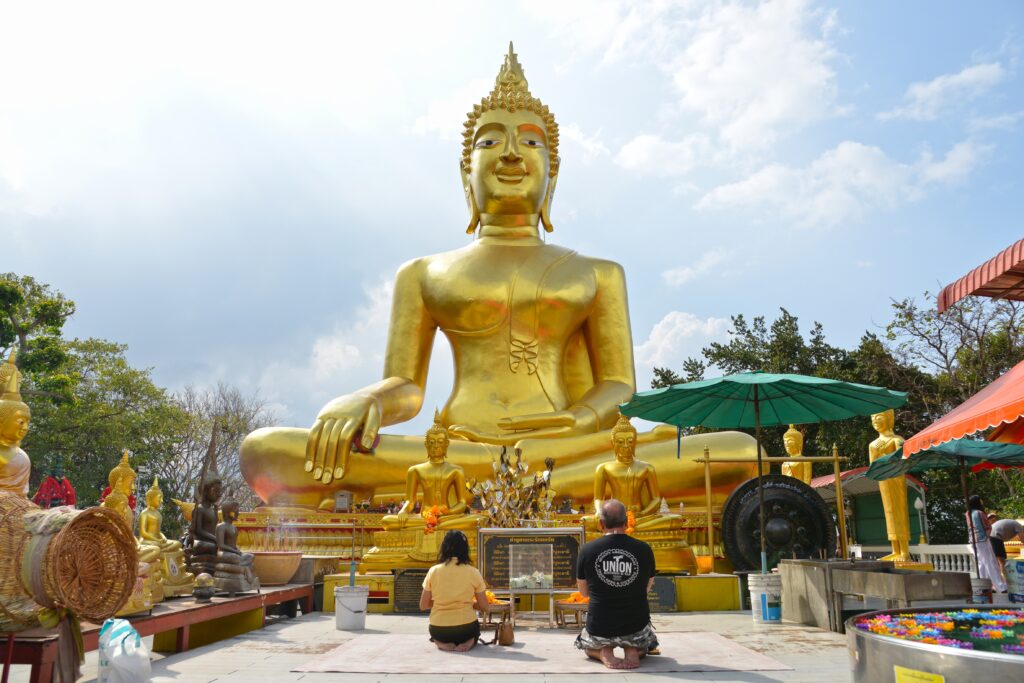
A central worship area containing a 3-meter tall gilded statue. Visitors often observe locals placing offerings of jasmine here.
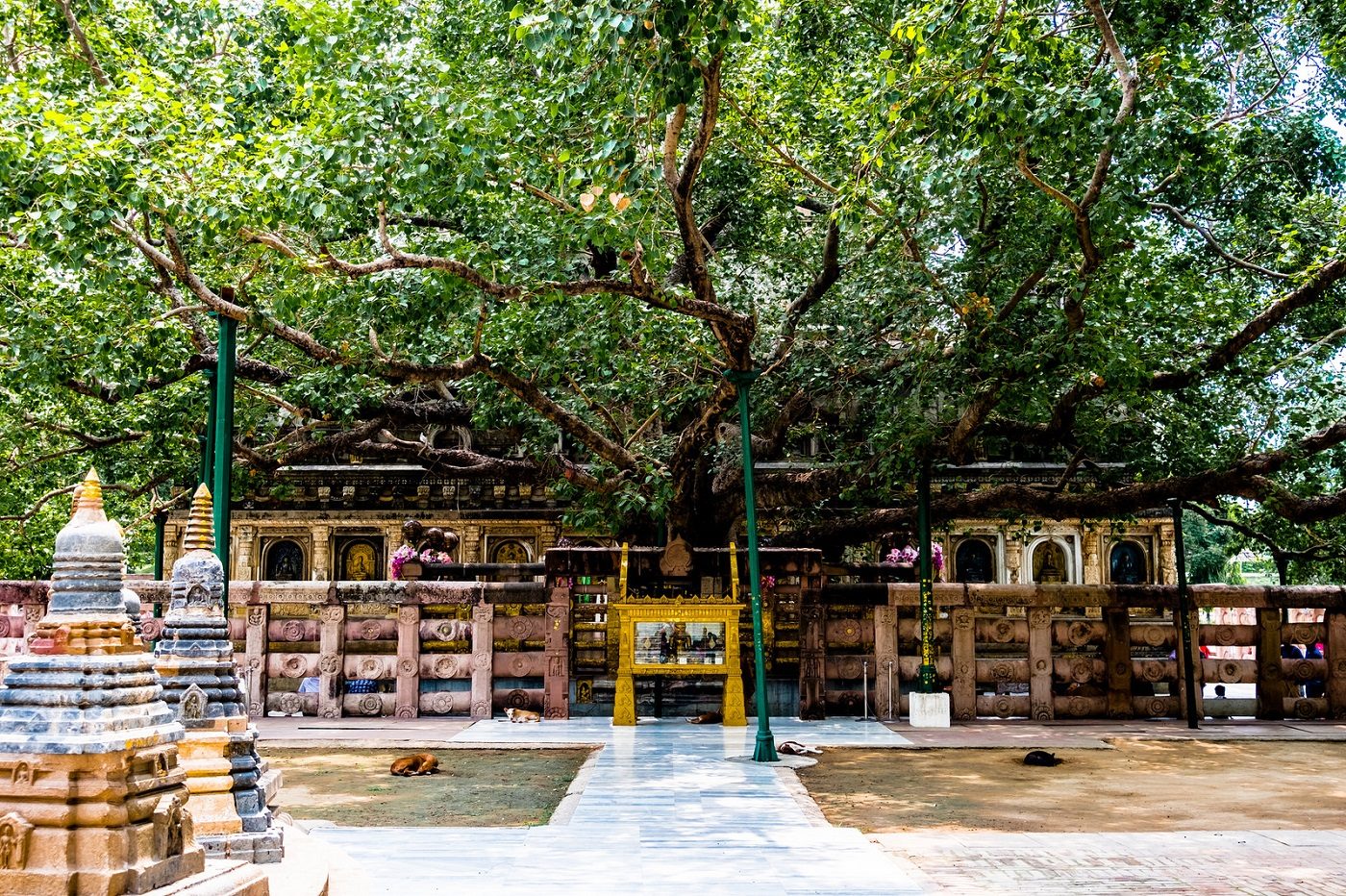
A mature tree providing significant shade to the temple courtyard. Local tradition marks this as a place for quiet meditation.
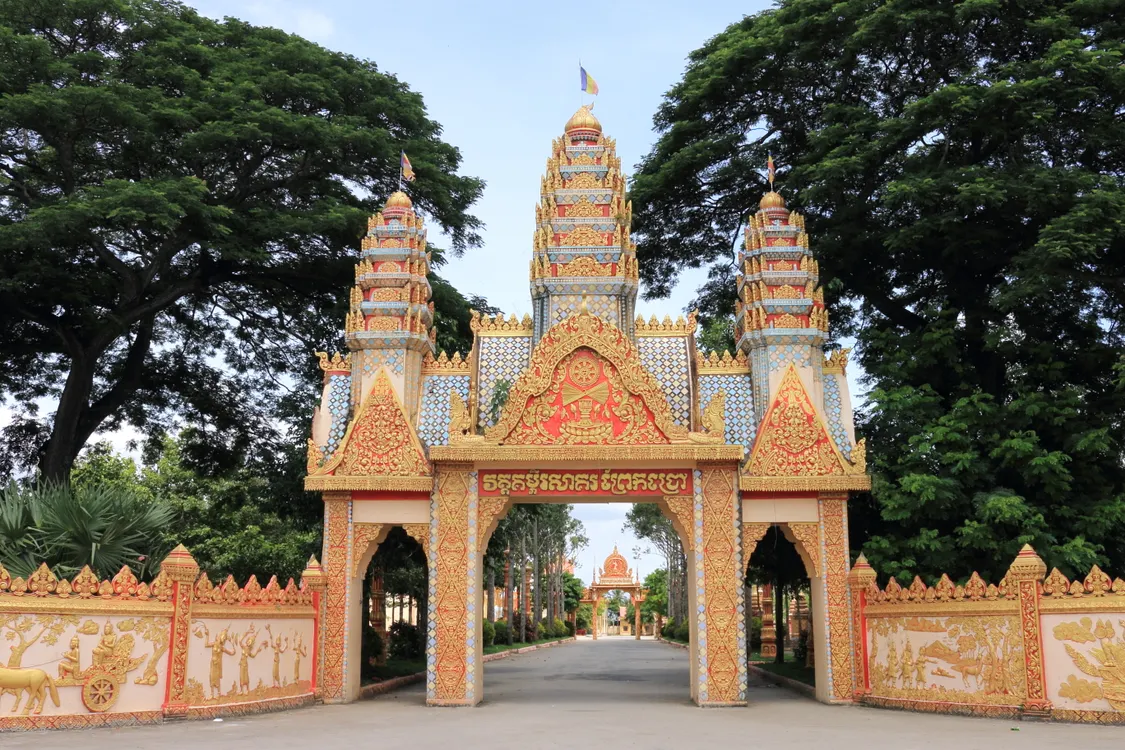
The main entry point features hand-carved teak wood depicting traditional Thai folklore. It serves as the primary photo opportunity for those on a chiang mai to chiang rai tour.
Every Chiang Mai to Chiang Rai tour side-by-side — duration, what's included, how you redeem.
| Experience | Duration | Rating | Transfers | Pickup | Skip-the-line | Guide | Price | |
|---|---|---|---|---|---|---|---|---|
|
Guided Experience Most popular
Chiang Rai Temple Circuit & Karen Village Day Trip
|
13 hr 30 min | ★ 4.8 | ✓ | ✓ | ✓ | ✓ | $30 | Book → |
|
Guided Experience
Chiang Rai Temple Circuit & Hill Tribe Experience
|
13 hr | ★ 4.8 | ✓ | ✓ | ✓ | ✓ | €45 | Book → |
|
Guided Experience
Chiang Rai Temple Circuit & Hot Springs Day Trip
|
24 hr | ★ 4.5 | ✓ | ✓ | ✓ | ✓ | €28 | Book → |
All prices from verified partners. Availability and exact terms confirmed at checkout.
Guided packages offer structured exploration with minimal logistics, whereas an independent temple visit grants total autonomy over your itinerary. Choosing the right chiang mai to chiang rai tour depends on whether you prioritize convenience or personal pace.
| Feature | Top pick Guided Tour | Independent Visit |
|---|---|---|
Planning Effort |
Minimal — full itinerary provided | |
Transit Flexibility |
Fixed schedule — group transportation | |
Cost Effectiveness |
Higher — inclusive of transport and guide | |
Crowd Management |
Often arrives during peak hours | |
Time Efficiency |
Optimized for multiple landmark coverage | |
| See tickets → |
Verdict: Securing chiang mai to chiang rai tour tickets simplifies travel for first-timers, while independent travel suits those preferring to explore Northern Thailand landmarks at their own rhythm using chiang mai to chiang rai tour tours options or private rentals.
Choose your ticket, select your date, and reserve in under two minutes. Secure checkout handled by our verified partner.
Instant confirmation by email, with a mobile voucher you can save offline. No printing, no queuing at a collection desk.
Arrive at the entrance, show your voucher on your phone, and walk in. Most tickets include priority or skip-the-line access.
Practical details for Chiang Mai to Chiang Rai tickets straight from our verified partners — hours, access, rules, and how to get there.
Phahonyothin Rd, Chiang Rai
Look for the central information kiosk.
Open in Google MapsFollow Phahonyothin Rd directly to the temple complex, which features on-site parking.
Take a bus to the main terminal, then hire a local songthaew.
Visitors must cover their shoulders and knees when exploring these sacred sites. Sarongs or scarves are recommended for those wearing sleeveless tops or shorts.
Security personnel may conduct bag inspections at the main entrance. Large suitcases are not permitted inside the primary temple galleries.
Photography is permitted in outdoor areas and designated sections of the grounds. Please respect signs prohibiting photos near specific statues or active prayer areas.
Main paths are paved and generally flat, though some historic sections feature uneven stone steps. Wheelchair access is limited to the exterior garden areas.
Mobile phones are allowed for photography and personal use. Maintain a low volume when walking near areas where locals are conducting ceremonies.
The site welcomes families with children, but keep in mind there are few shaded resting areas. Carry sufficient water to maintain hydration throughout the visit.
Food and drinks are not allowed inside the temple structures themselves. Several small stalls outside the gate offer local snacks and cold refreshments.
Pets are strictly prohibited within the temple grounds, with the exception of registered service animals. Please make prior arrangements for pet care during your excursion.
The 200 THB conservation fee collected at the entrance is vital for the ongoing preservation of this historical site. Visitors should keep their tickets accessible for intermittent spot checks.
Best time to go, insider tips, nearby landmarks, and the cancellation fine print — flip through to skim what matters to you.
How crowds, weather, and events shift across the year.
September and October offer cooler temperatures and lower humidity after the monsoon rains. This is an ideal period for a chiang mai to chiang rai tour.
Small details that turn a good visit into a great one.
Arrive between 08:00–10:00 to escape the heat and large coach groups.
Non-bookable sights within a short walk — free to visit, easy to pair.
A golden landmark designed by the same artist as the famous white temple.
A significant statue dedicated to the founder of Chiang Rai city.
Flexible, no hidden fees.
Cancellations made 24 hours in advance receive a full refund. The 200 THB conservation fee is non-refundable once the ticket is issued.
Hand-picked options within walking distance — pick a district for vibe, or a specific hotel for convenience.
A high-end option for travelers taking a chiang mai to chiang rai tour.
Central location convenient for morning departures.
The three-hour northbound route from Chiang Mai climbs through teak-forested foothills and terraced valleys that once formed the outer frontier of the Lanna kingdom.
Highway 1 follows ancient caravan paths that connected the rice plains of the Ping River with the tea-trading posts of Chiang Rai, a settlement founded in 1262 by King Mangrai as the first capital of his expanding realm. For centuries the journey required oxcart or elephant; by the mid-twentieth century a paved road linked the two cities, and today the corridor carries a steady stream of visitors drawn northward by a concentration of contemporary temple architecture unmatched elsewhere in Thailand.
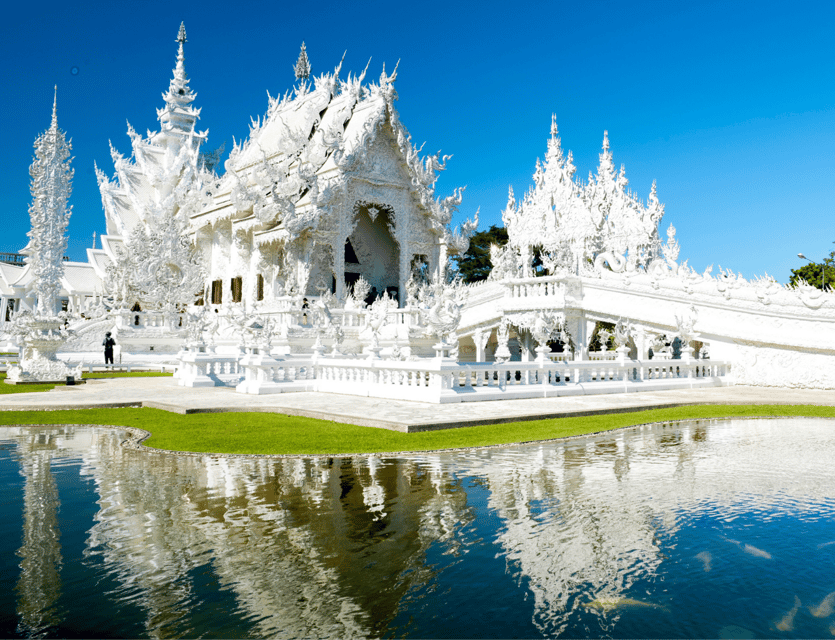
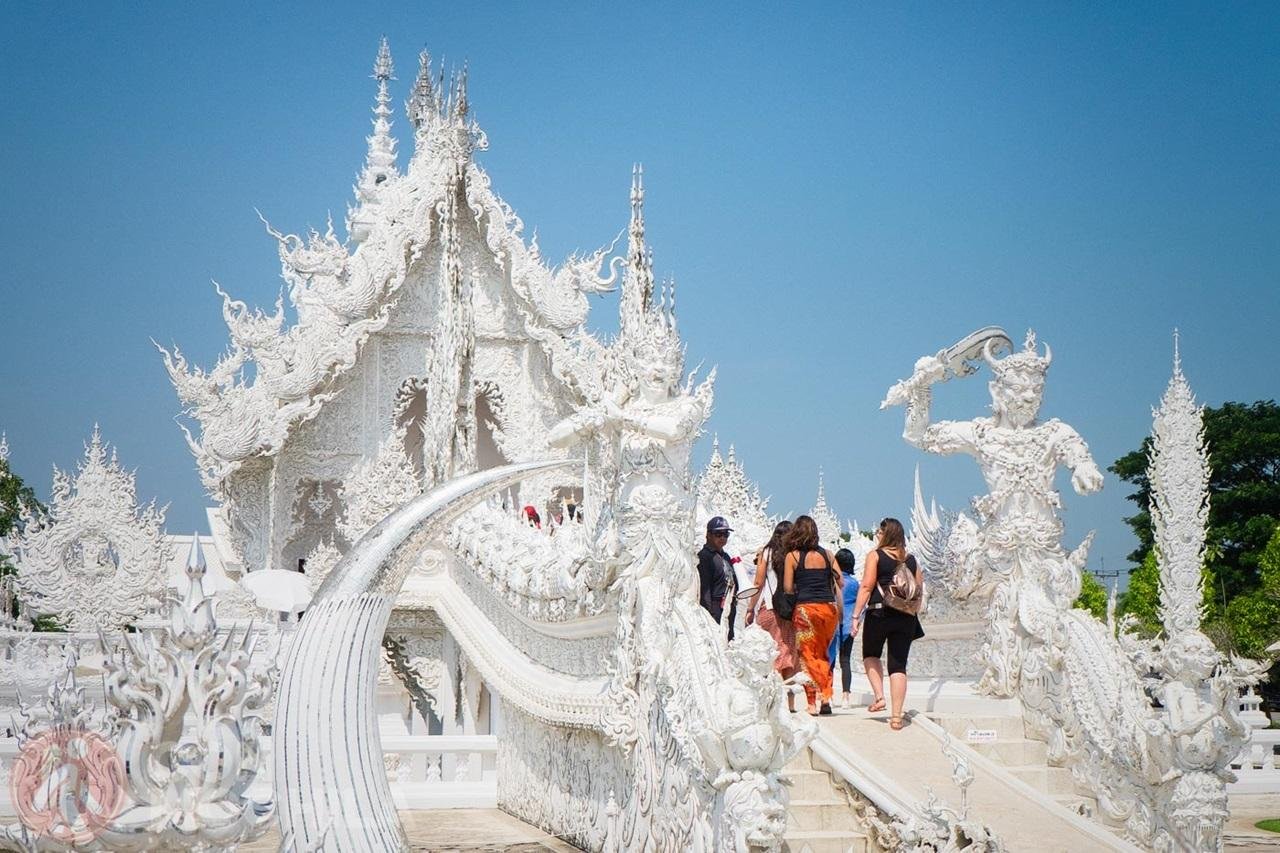
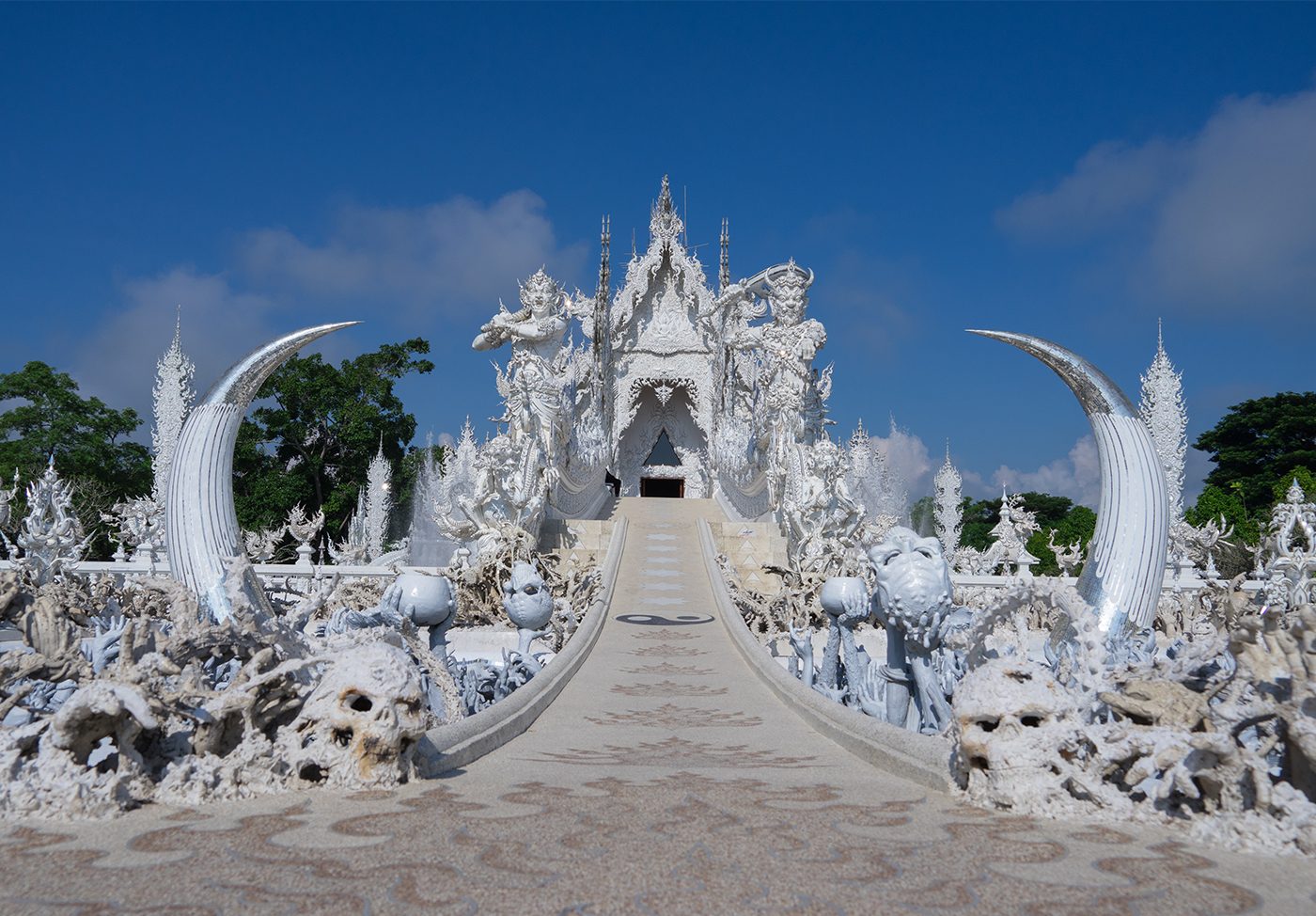
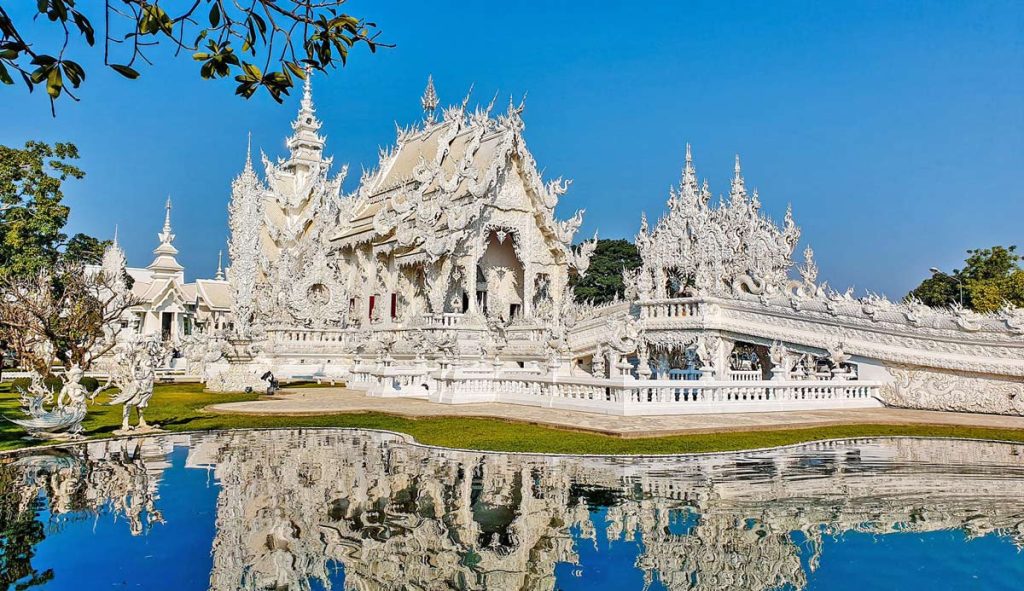
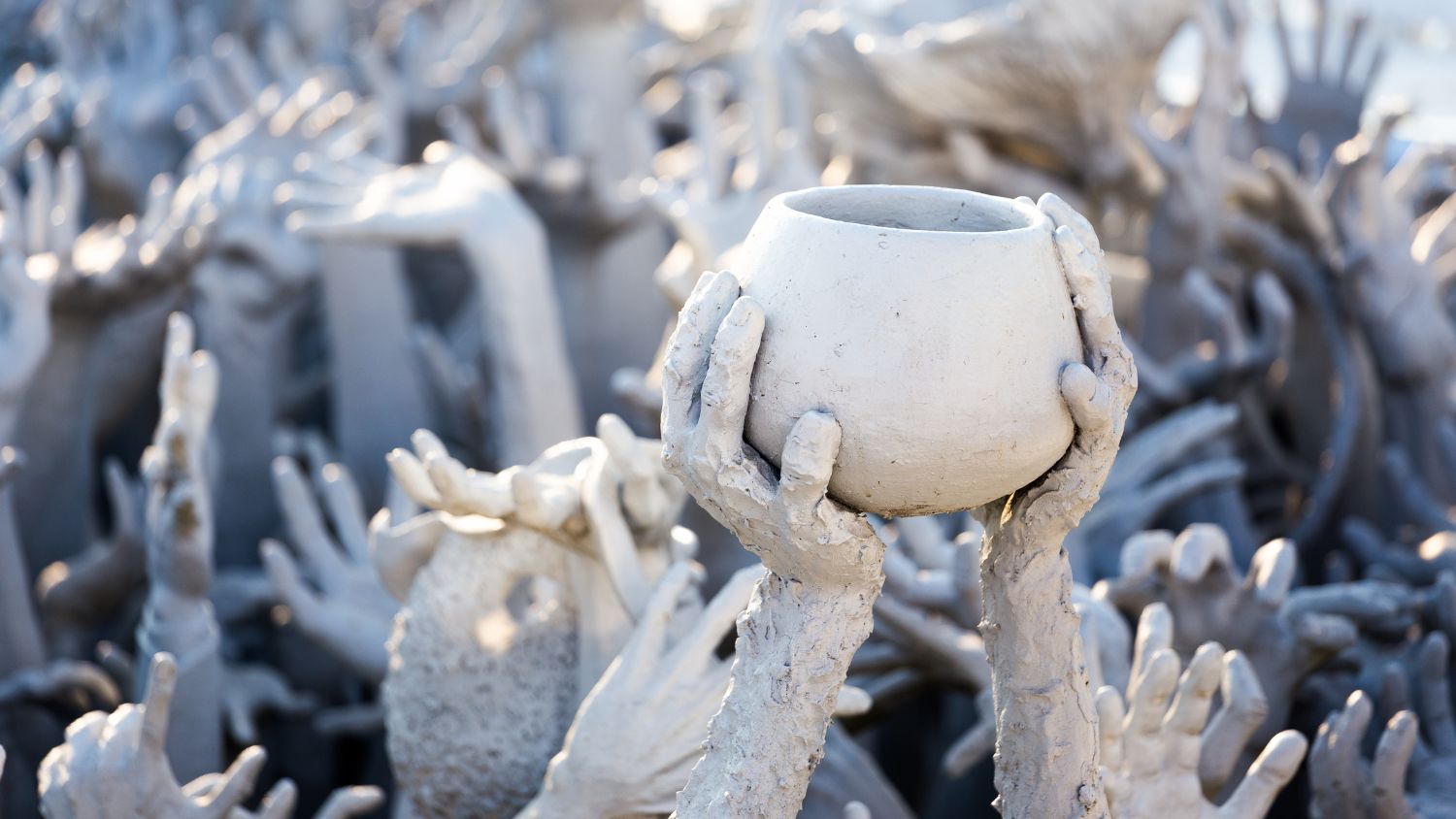
Chiang Rai's modern identity is inseparable from Wat Rong Khun, the White Temple completed in phases since 1997 by artist Chalermchai Kositpipat. Its all-white exterior — plaster over steel and concrete — references purity in Buddhist iconography, while the mirrored glass mosaics embedded in every surface fracture sunlight into thousands of refracting points. The bridge crossing the temple's ornamental moat is flanked by hundreds of outstretched arms rising from below, a visual metaphor for unrestrained desire. Inside the main ubosot, murals juxtapose traditional Theravada cosmology with pop-culture figures from contemporary film and comics, a deliberate collision Kositpipat describes as commentary on modern distraction. Construction continues: the master plan calls for nine buildings, and as of 2026 only three stand complete.
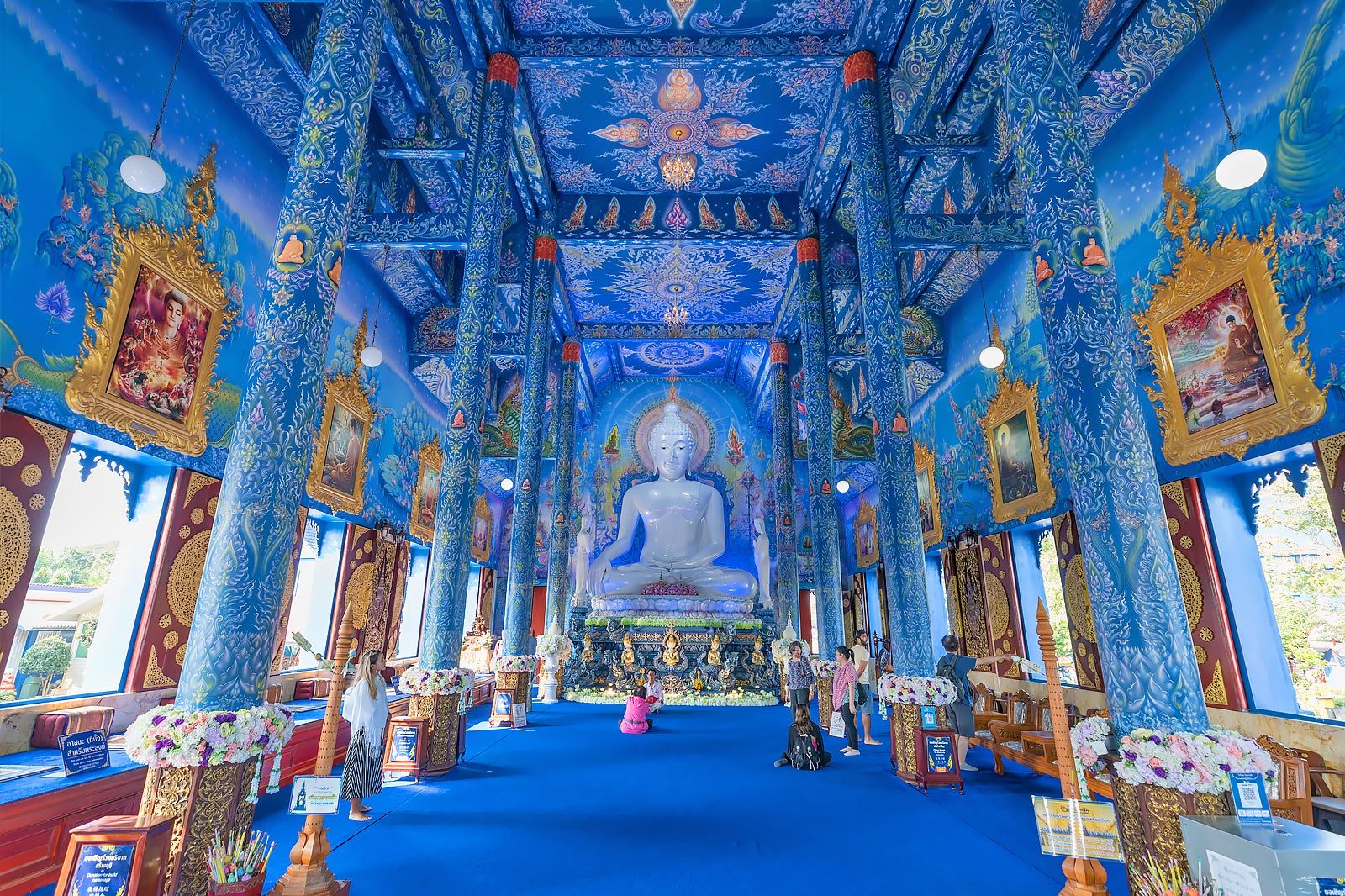
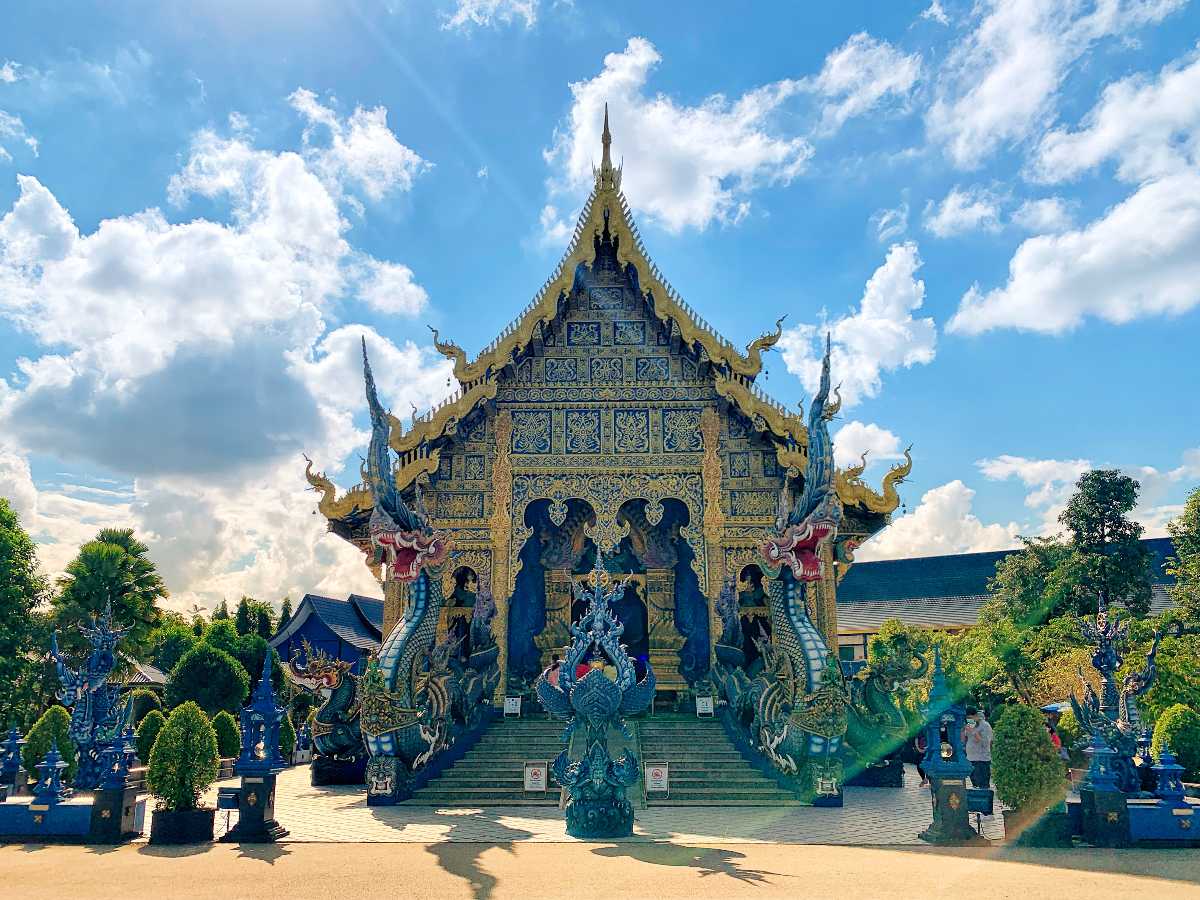
Eight kilometres north, Wat Rong Suea Ten — the Blue Temple — opened to visitors in 2016, its cobalt-and-ultramarine façade a counterpoint to the White Temple's monochrome severity. Designed by Phuttha Kabkaew, a former student of Kositpipat, the temple's interior is dominated by a towering white Buddha framed by indigo murals depicting the life of Siddhartha Gautama. The naga serpents guarding the entrance are rendered in a deeper lapis tone, their scales picked out in gold leaf that catches the northern light streaming through clerestory windows.
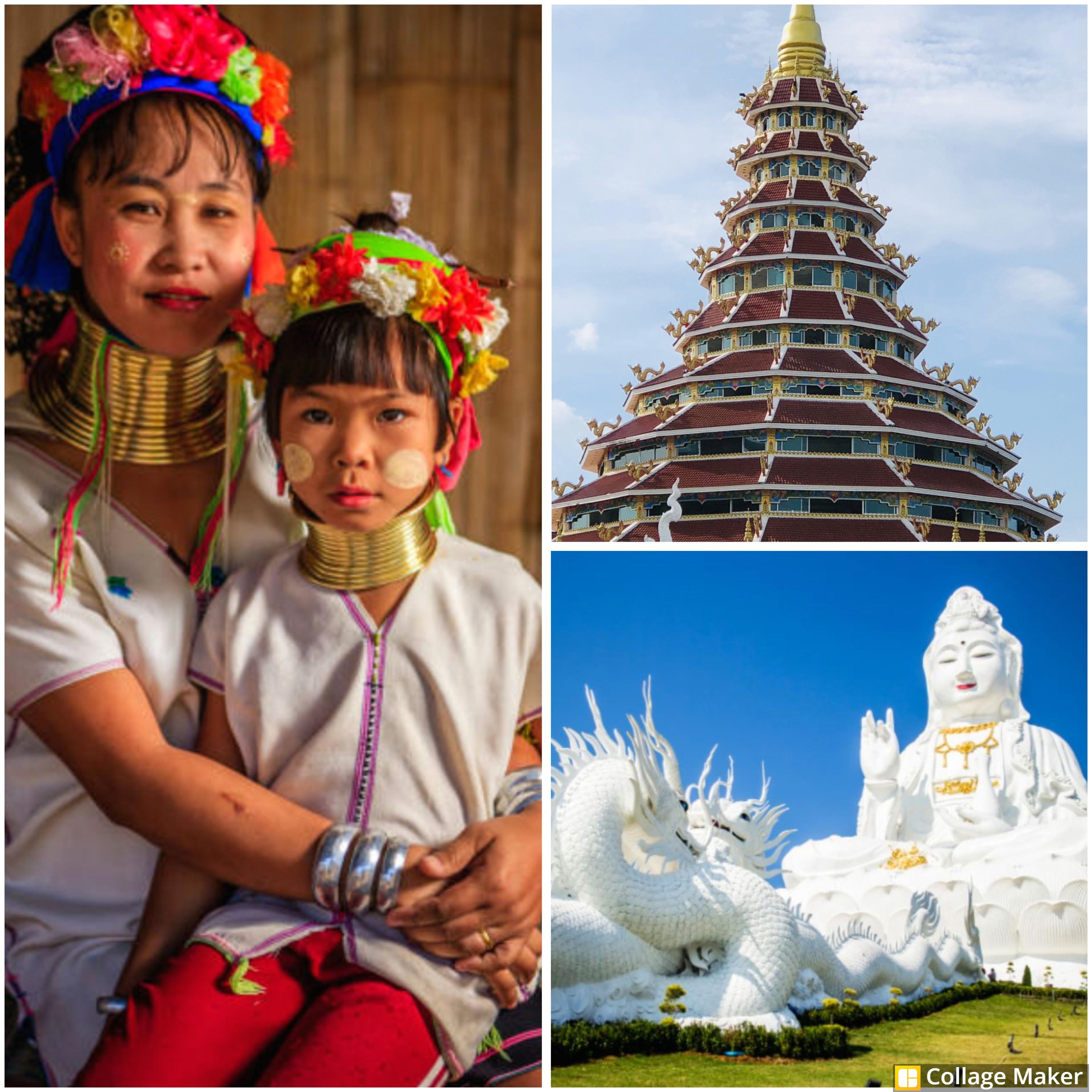
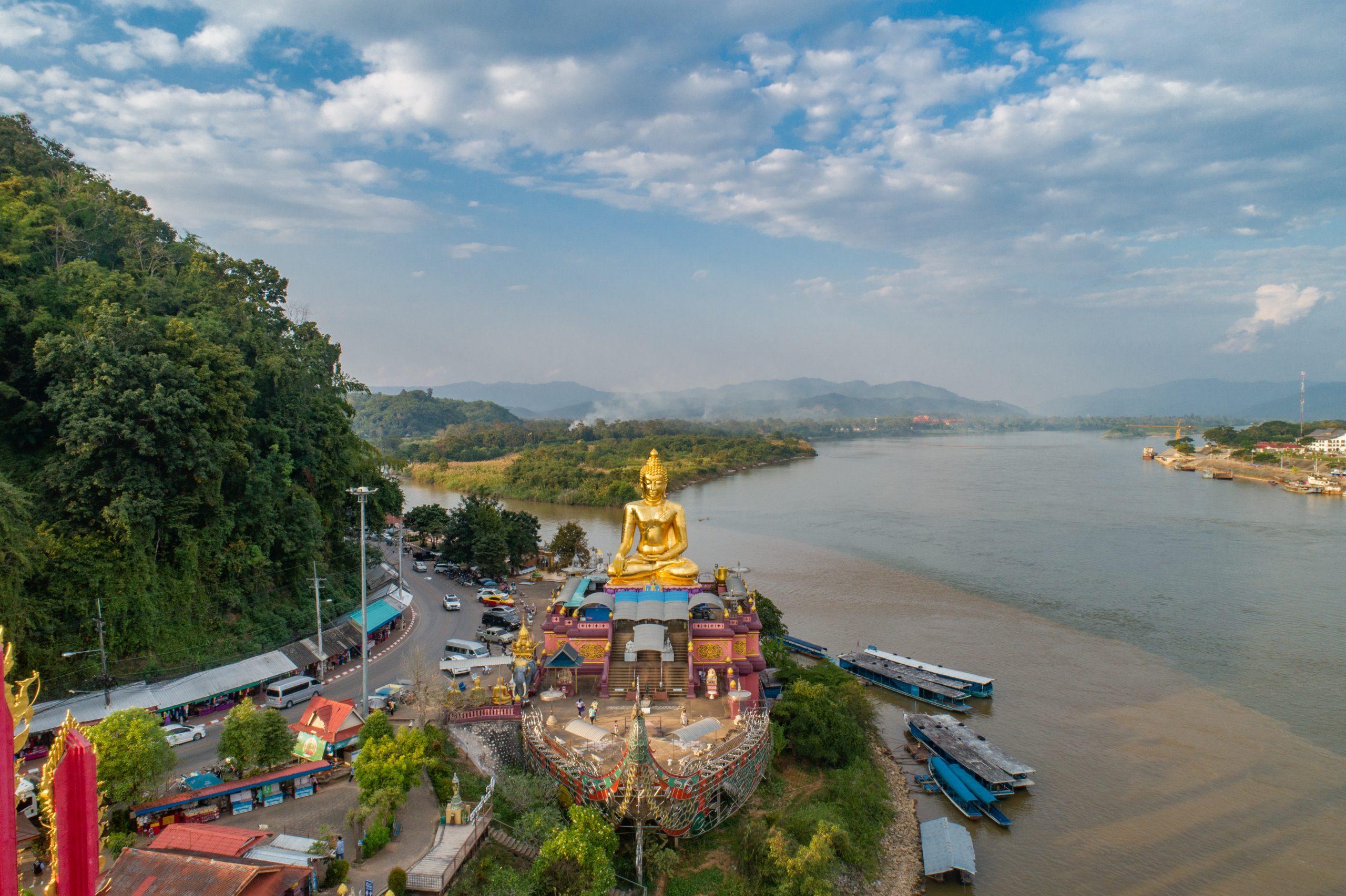
Beyond the temple circuit, a Chiang Mai to Chiang Rai day tour frequently continues to the Golden Triangle, the wedge of land where the Mekong and Ruak rivers converge at the borders of Thailand, Laos, and Myanmar. The region earned its name during the opium-trade era of the mid-twentieth century; today the Hall of Opium museum chronicles that history with artefacts, documentary footage, and reconstructed trading posts. The riverbanks remain quiet, lined with teak longboats and small villages of the Akha and Karen hill tribes, whose textile workshops and silver jewellery studios open to visitors willing to venture off the main highway.

"The bridge crossing the temple's ornamental moat is flanked by hundreds of outstretched arms rising from below, a visual metaphor for unrestrained desire."
A step-by-step walkthrough of Chiang Mai to Chiang Rai tickets — what you'll see, how long each stage takes, and the details that matter.
You depart Chiang Mai before sunrise, the van climbing through mist-wrapped valleys as the first light touches the Doi Luang range. By mid-morning you arrive at Wat Rong Khun, where the White Temple's mirrored glass catches the sun in a blinding scatter.
You cross the bridge of outstretched hands, pausing to photograph the fractal detail of the plaster façade before stepping into the dimly lit ubosot. The murals inside pull you close: traditional hell realms populated by modern icons, a surreal collision that takes several minutes to decode.
Twenty minutes north you reach the Blue Temple, its cobalt exterior a visual relief after the white glare. Inside, you stand beneath the towering Buddha, the indigo murals wrapping around you in a continuous narrative. The morning crowds have not yet arrived, and the space feels meditative, the only sound the shuffle of your own steps on polished stone.
By afternoon the van reaches the Golden Triangle, where the Mekong curves wide and brown between Thailand and Laos. You walk the riverbank, passing teak longboats and vendors selling hill-tribe textiles. The Hall of Opium museum offers an hour of archival photographs and reconstructed opium dens, a sobering counterpoint to the morning's temple beauty. You return south as the light softens, the highway unwinding through the same forested valleys, now gilded by late sun.
The temples are open daily from 08:00–17:30.
Yes, the 200 THB conservation fee for the Chiang Rai Temples includes access to the Cave of Art.
We recommend arriving between 08:00–10:00 to avoid peak midday heat and large groups.
Yes, shoulders and knees must be covered to respect the sacred nature of the Chiang Rai Temples.
Tickets are generally valid for a single entry on the date of purchase.
Accessibility is limited; while main paths are flat, some areas of the Chiang Rai Temples have uneven steps.
Bring sunscreen, a hat, modest clothing, and your 200 THB conservation fee.
The site is located at Phahonyothin Rd, Pa O Don Chai, Mueang Chiang Rai District, Chiang Rai 57000, Thailand.
There are small stalls near the Chiang Rai Temples entrance for local snacks and beverages.
Yes, the 200 THB conservation fee is mandatory for every foreign visitor.